
Heart of Deimos: The Infested Open World That Reshaped Warframe
The lights dimmed on TennoCon 2020, and Digital Extremes did what it does best: it surprised everyone. The biggest reveal was not a new cinematic quest or a Prime Access—it was the Heart of Deimos, a brand-new open-world expansion for Warframe. The update would arrive on August 25, 2020, on every platform where the game was played. Six years later, in 2026, that reveal still stands as a turning point. It gave Tenno a third open-world zone, a moon soaked in Infestation, and a set of systems that changed how players thought about Warframes themselves.
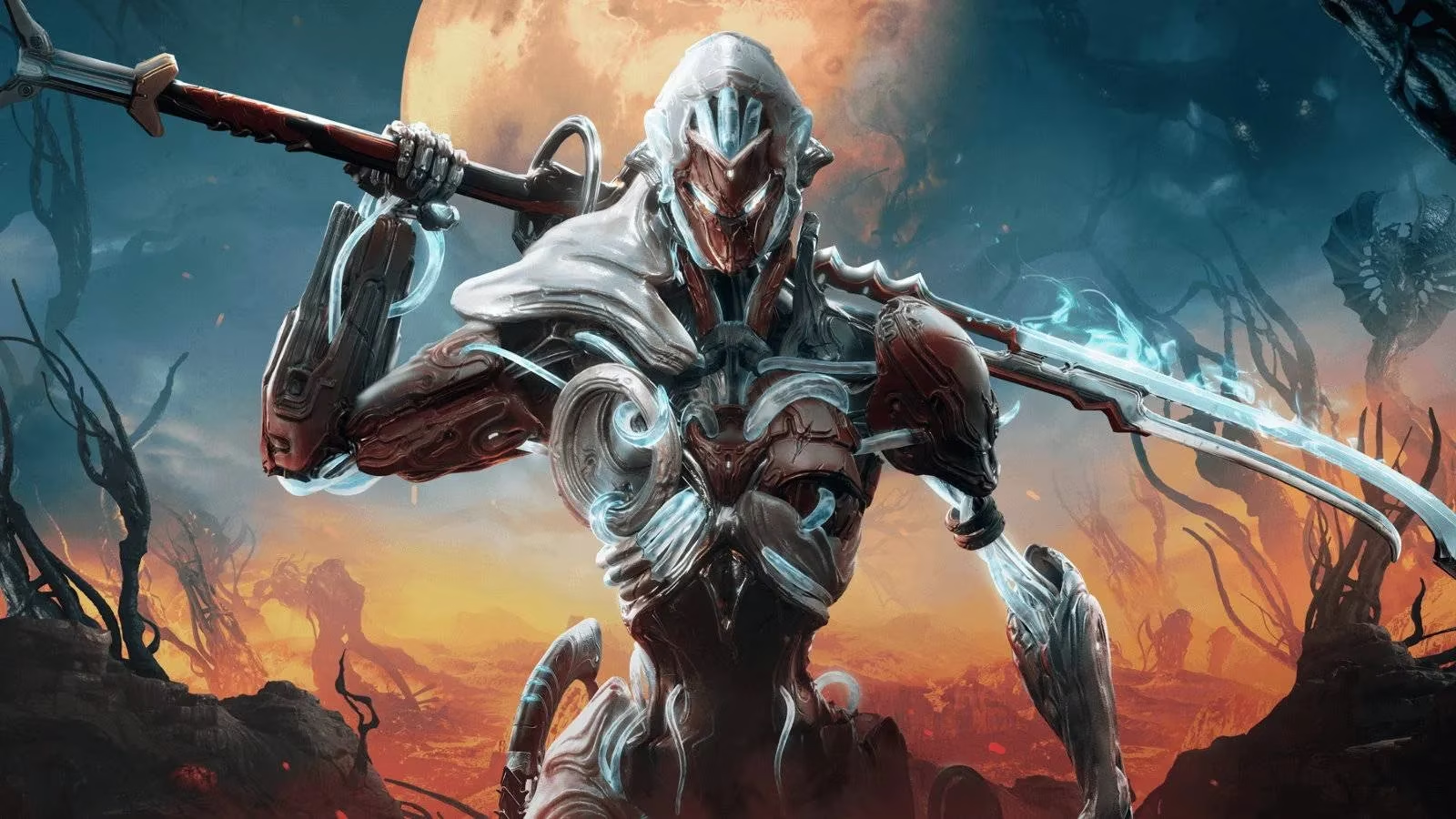
A Moon Unlike Any Other
Deimos was not another Plains of Eidolon or Orb Vallis. Those places had been defined by Grineer and Corpus themes, respectively—dusty plains and frozen valleys shaped by military occupation and corporate greed. Deimos, the second moon of Mars, was something else entirely. It was the apparent origin of the Infestation, a world where the plague had not merely spread but had become the landscape itself.
The surface crawled with Infested growth. Below it, ever-changing tunnels waited for Warframes to enter, twisting and reforming as Tenno pushed deeper to defeat the machinations of the Infested. Above ground, two giant worms faced off in a daily battle, and the Entrati populace hung in the balance. Tenno would take missions from Mother to save the Heart of Deimos and let the Entrati live for another day. The setup was grim, strange, and deeply Warframe.
Xaku, the Broken Warframe
To help Tenno explore this new world, Digital Extremes introduced Xaku, the upcoming community-made Warframe. Called ‘The Broken Warframe,’ Xaku literally broke into pieces when casting some abilities. The community did not know much about those abilities at the time, but the precedent was promising. Warframe’s first community-made frame, Nova, was considered one of the best in the game. If Nova was any indication, the Warframe community definitely knew how to make a good frame.
Xaku’s fragmented design fit Deimos perfectly. The moon was a place of broken biology and ancient machinery, and a Warframe that came apart at the seams looked right at home among the Infested tunnels.
The Helminth Chrysalis System
Heart of Deimos also brought an unprecedented era of Warframe customization. The Helminth Chrysalis System allowed Tenno to take an ability from one Warframe—a process called subsumption—and give that ability to a different Warframe. The donating Warframe was consumed in the process, but once the ability was unlocked, it could be spliced onto as many new Warframes as desired.
There were also eight generic Helminth abilities that could be used in place of regular Warframe abilities. That gave less spectacular frames the ability to toss a useless ability in favor of something more useful. The system was controversial at first, but it changed buildcrafting forever. Players began to think of Warframes as collections of parts rather than fixed kits.
| Feature | What It Did |
|---|---|
| Deimos open world | Third open-world zone, Infested theme, daily worm battle |
| Xaku | Community-made Broken Warframe that fragmented during ability casts |
| Helminth Chrysalis | Ability subsumption and transfer between Warframes |
| Generic Helminth abilities | Eight universal abilities to replace regular Warframe powers |
| New player experience | Revamped onboarding for newcomers |
| Hydroid Prime | Finally received a trailer |
What Made Deimos Distinct
-
🌑 A living moon — Infestation was not just a faction; it was the terrain.
-
🐛 Daily worm battle — Two giants fought while the Entrati waited.
-
⚙️ Broken Warframe — Xaku fragmented with every cast.
-
🧬 Subsumption — One Warframe’s power became another’s tool.
A New Onboarding Experience
New Warframe players also received a brand-new onboarding experience with Heart of Deimos. The new player experience had long been criticized as overwhelming, and Digital Extremes used the expansion to address that. The moon offered a fresh entry point, and the update tried to make the first hours of Warframe less of a maze. For a game that had spent years layering systems on top of systems, that was no small task.
The Wait Before Launch
Heart of Deimos arrived on August 25, 2020, on every platform Warframe was played on. To prime players for its arrival, Warframe awarded double affinity from the time of TennoCon until August 12, 2020. Hydroid Prime finally received a trailer, a detail that Warframe veterans were happy to note. The update was not just a new map; it was a statement that Warframe could still surprise its audience.
Why It Still Matters in 2026
By 2026, Warframe had seen many more updates, but the Heart of Deimos expansion remained a landmark. It proved that an open world could be built around horror and biology rather than military factions. It introduced Xaku, a frame whose broken silhouette became instantly recognizable. And it made the Helminth Chrysalis System a permanent part of buildcrafting.
The Tenno who descended on Deimos in 2020 found a moon that was alive, hostile, and deeply strange. They fought in ever-changing tunnels, saved the Entrati one day at a time, and learned to break their Warframes apart in the name of customization. Six years later, the Heart of Deimos still beats at the center of Warframe’s history.
Research highlighted by CNET - Gaming helps frame why Heart of Deimos stood out as more than a routine expansion, especially in how it blended technological systems like Helminth customization with a horror-driven open world that felt distinct from Warframe’s earlier zones. That broader perspective makes Deimos notable not only for its Infested atmosphere and Xaku’s fractured identity, but also for how the update reflected Warframe’s continuing evolution as a live service game willing to rethink both player onboarding and long-term buildcraft.
Comments