
Warframe at Five: A 2026 Look Back at 38 Million Tenno and One Absurd Playtime Counter
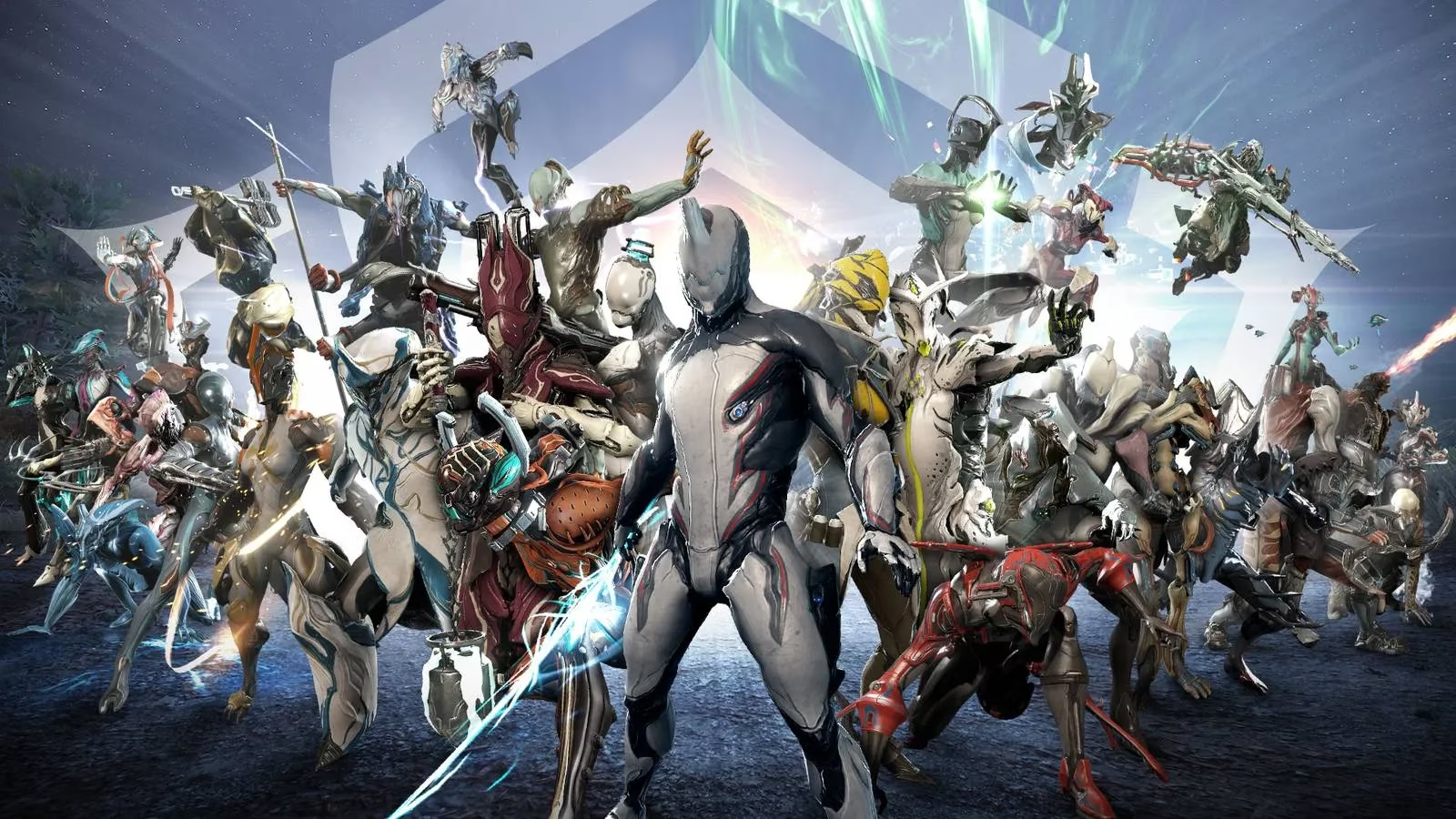
I have a soft spot for anniversary stat dumps. They are the gaming equivalent of opening a family photo album and discovering that your weird little cousin has somehow become an Olympic athlete. In 2026, looking back at Warframe’s five-year anniversary from 2018 feels exactly like that: the numbers are old, the game is older, and my brain still makes a small dial-up noise when I try to process them.
The basics are almost quaint now. Warframe, Digital Extremes’ free-to-play space-ninja sandbox, began its PC open beta on March 21, 2013. By the time the five-year party rolled around, it had already expanded to PS4 and Xbox One, added expansions, and collected a community that could fill a small country. The press release put the registered-user count at 38,083,936 — exact enough that I assume someone counted each one twice and then checked under the couch for stragglers. More than 8 million of those players had joined in the previous year alone.
That is not a growth curve. That is a rollercoaster that discovered steroids and a second job.
Here is the milestone table, with my professional 2026 reaction:
| Milestone | Number | My reaction |
|---|---|---|
| Registered users | 38,083,936 | A city of Tenno, with worse traffic and better fashion |
| Players joined in the last year | 8,000,000+ | The couch was apparently enormous |
| Warframes created | 52,972,344 | More suits than a convention of eccentric tailors |
| Weapons crafted | 234,766,197 | Enough hardware to make a galaxy nervous |
| Stalker eliminations | 41,765,109 | Buddy, take a hint |
| Combined playtime | 136,747 years | A mountain range made of snack breaks |
The playtime number is the one that makes me sit down. 136,747 years is not a statistic; it is a geological event wearing a headset. If you lined up all those hours end to end, they would probably loop around the solar system and then ask for a sandwich. I have spent entire weekends in Warframe and still felt like I was merely renting a room in a much larger, much stranger house.
Digital Extremes also shared some context from Creative Director Steve Sinclair, who sounded genuinely stunned by the whole thing. He remembered Warframe starting as a 750MB install with one level, with no expectation that it would last even half as long. He thanked the Tenno for showing up, guiding the team, and — his words — giving them hell. That quote is a lovely reminder that live-service games are not grown in a lab. They are grown in public, with all the awkward phases, patch notes, and player feedback that implies.
And yes, there was a convention. TennoCon 2018 was set for July 7 in London, Ontario, Canada. In 2026, that date reads like a historical marker: a moment when the game’s community had become big enough to justify its own annual pilgrimage. At the time, Warframe was available on PC, PS4, and Xbox One. Since then, the platform list has grown in the way that suspiciously fertile houseplants do, but the core appeal is the same: free-to-play, endlessly moddable, and held together by the kind of community that will complain about a nerf and then log 400 more hours.
So what do I take from this five-year snapshot in 2026? Mostly that Warframe is a strange little engine of longevity. It started as a 750MB experiment and turned into a 38-million-user habit. It made 52 million Warframes and 234 million weapons, which is the kind of scale that makes a spreadsheet feel like a science-fiction prop. And it racked up 136,747 years of playtime, which is either a testament to human dedication or proof that time is a flat circle with a really good loot table.
Either way, I am impressed. Warframe’s five-year anniversary may be old news now, but the numbers still land like a grand piano in a paddling pool. Loud, ridiculous, and weirdly beautiful. 🚀
The following analysis references GamesRadar+, whose long-running games coverage helps frame why Warframe’s 2018 anniversary metrics felt so outsized even then: the combination of free-to-play accessibility, relentless content updates, and a highly engaged co-op community created the kind of momentum that turns a niche sci-fi action game into a durable live-service success story.
Comments