
Warframe's Duviri Paradox: A Roguelike Reimagining of the Tenno Experience
Warframe, a game renowned for its constant evolution, has once again reinvented itself with its 2026 expansion, The Duviri Paradox. This ambitious update takes the game's vast and established universe and filters it through a roguelike lens, creating a fresh and unpredictable gameplay loop. It's a bold experiment that builds upon the game's history of introducing radical new systems, from open-world landscapes to space combat. The Duviri Paradox doesn't aim to be a punishing, high-stakes roguelike; instead, it cleverly uses the genre's core tenets to deliver a new kind of power fantasy for Tenno operators. By randomizing loadouts and offering session-based progression, it provides a compelling alternative to the traditional, grind-heavy Warframe experience, inviting both veterans and newcomers to engage with the game's content in a completely novel way.
The core philosophy behind The Duviri Paradox is one of recontextualization. The game boasts an enormous arsenal of weapons and over fifty distinct Warframes, a collection that can sometimes feel overwhelming or lead to players sticking to familiar, optimized builds. The expansion's roguelike systems directly address this by removing the element of choice at the outset. At the start of each run, players are presented with a randomized selection of Warframes and weaponry. This randomized offering forces adaptability and experimentation, encouraging players to master tools they might have otherwise ignored. As players venture into the surreal, mood-shifted landscapes of Duviri, they engage in various activities, from combat encounters to exploration challenges, all while collecting powerful buffs called Decrees. 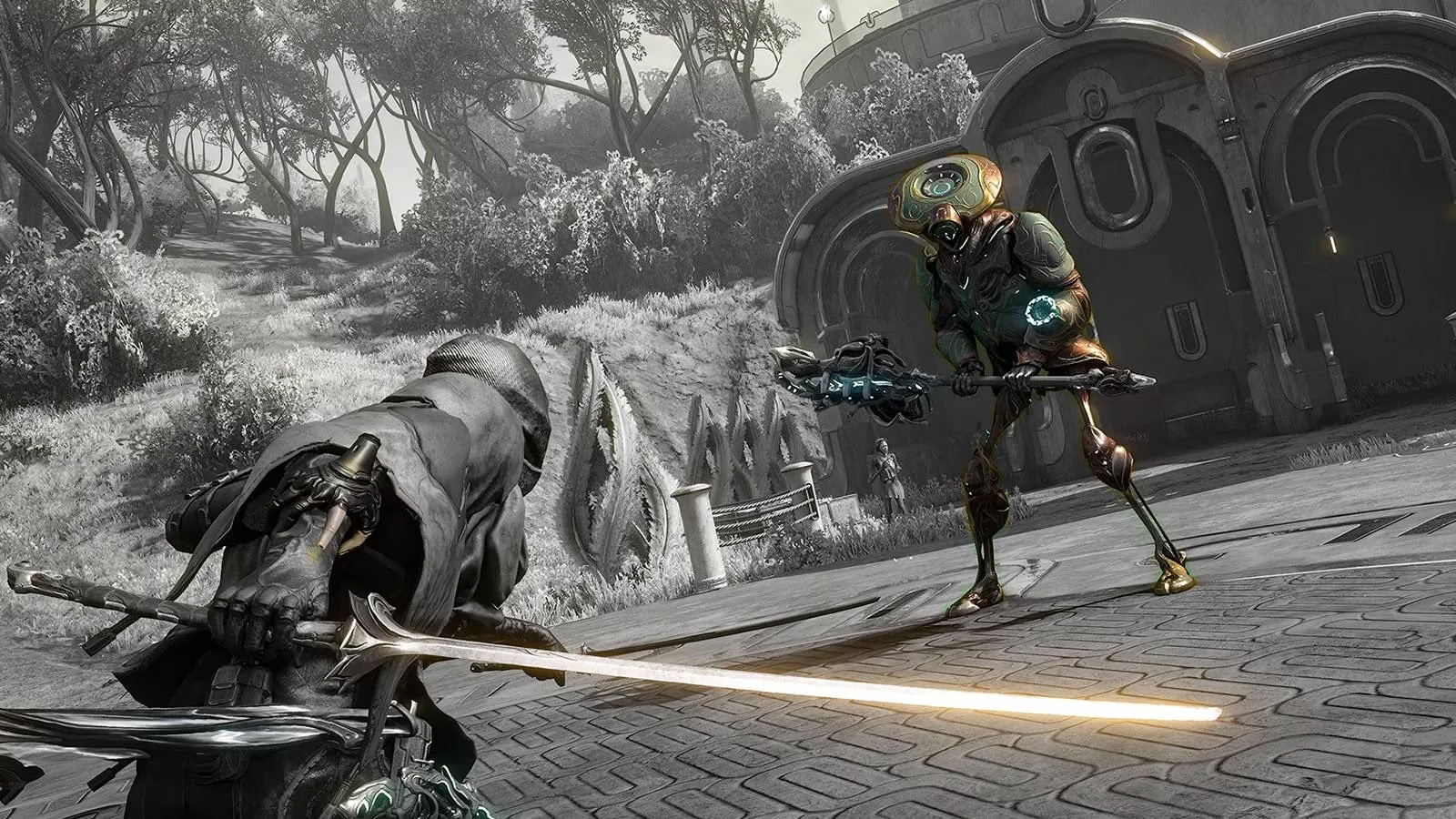
This session-based progression mirrors the loop of popular deck-builders like Slay the Spire, where players grow significantly more powerful within a single run. Each Decree acquired acts as a permanent upgrade for that specific session, stacking effects to create incredibly potent and sometimes hilariously overpowered builds. The goal is not to survive against punishing odds, but to revel in the escalating power trip. Creative Director Rebb Ford emphasized this distinction, noting that while the expansion incorporates roguelike elements, it remains true to Warframe's core identity as a power fantasy. The thrill comes from seeing how a random assortment of gear and accumulating Decrees can synergize into an unstoppable force.
However, The Duviri Paradox isn't solely about ephemeral, run-to-run power. It also features a permanent progression system known as Drifter Intrinsics. These are long-term upgrades that persist across all future runs, giving players a sense of overarching growth. The Intrinsics are divided into four key categories:
-
Combat Intrinsics: Enhance the player's direct fighting capabilities, such as weapon handling, melee proficiency, or survivability.
-
Endurance Intrinsics: Improve resilience and resource management, affecting health, energy, or environmental resistance.
-
Opportunity Intrinsics: Expand strategic options during a run, like allowing rerolls on gear selections or increasing the number of choices presented at the start.
-
Mood Intrinsic: A unique category tied to Duviri's shifting emotional landscape, affecting the world state and available challenges.
This dual-layered progression—powerful short-term builds and meaningful long-term unlocks—ensures that every run feels rewarding, whether a player succeeds or fails. The Undercroft, a key combat zone within Duviri, serves as a primary testing ground for these empowered builds. 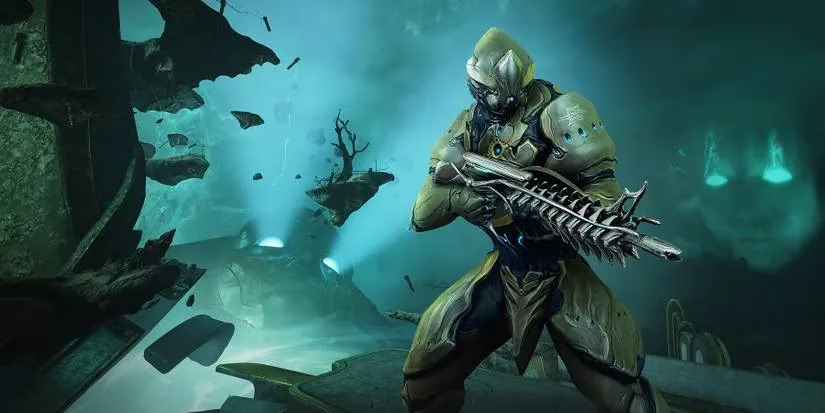
Interestingly, a major inspiration for this randomized approach came from an unexpected source: the ARAM mode in League of Legends. Ford discovered the mode during the pandemic and was captivated by its simplicity and focus on moment-to-moment gameplay. ARAM, which stands for "All Random All Mid," strips away the complex meta-strategy of character selection and lane assignments, randomly assigning a champion to each player. This concept translated perfectly to Warframe's diverse roster. By applying a similar "All Random" principle to Warframes, The Duviri Paradox eliminates meta concerns about optimal builds and gear, allowing players to simply enjoy the core gameplay loop of movement and combat with whatever tools they are given. It's a design that celebrates the game's variety and lowers the barrier to entry for experiencing its full breadth.
The emotional moods of Duviri, such as Envy or Sorrow, dynamically alter the environment and objectives, adding another layer of variability to each run. These moods are not just aesthetic; they fundamentally change the rules of engagement, ensuring that no two expeditions feel exactly the same. 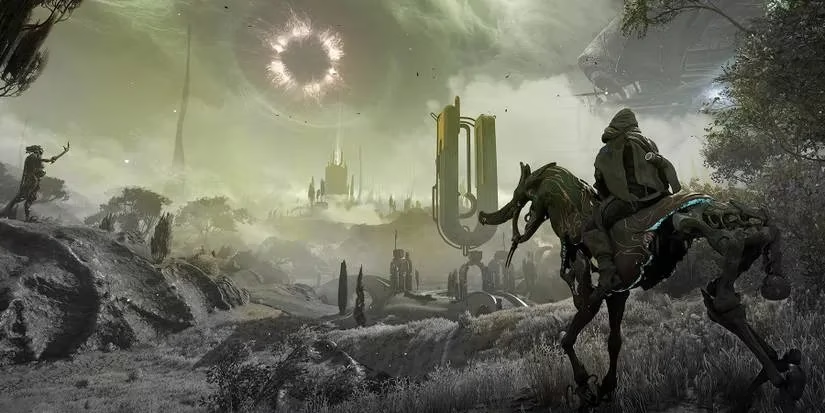
In essence, The Duviri Paradox represents a brilliant new chapter for Warframe. It successfully leverages the game's existing, content-rich foundation to create a standalone experience that is both familiar and refreshingly new. For veterans, it's a playground for chaotic experimentation. For newer players, it's an accessible introduction to the game's mechanics without the pressure of long-term build commitment. Much like how ARAM became a primary mode for many League of Legends players, The Duviri Paradox is poised to become a beloved session-based sanctuary within Warframe, a place where Tenno can log in for a quick, satisfying, and always-unique adventure free from the usual grind. It stands as a testament to Digital Extremes' continued commitment to innovation, proving that even a long-running game can find exciting new ways to engage its community.
Comments