
Warframe’s Bullet Jump: The Glorious Bug That Became a Movement Religion
I have a confession: I do not walk in Warframe. I do not run. I bullet jump, slide, double jump, and pray my Gauss does not kiss a wall at Mach 5. Apparently, the move I treat like a religious ritual was born from a bug that players abused so hard Digital Extremes had to either kill it or crown it. Spoiler: they crowned it. 👑
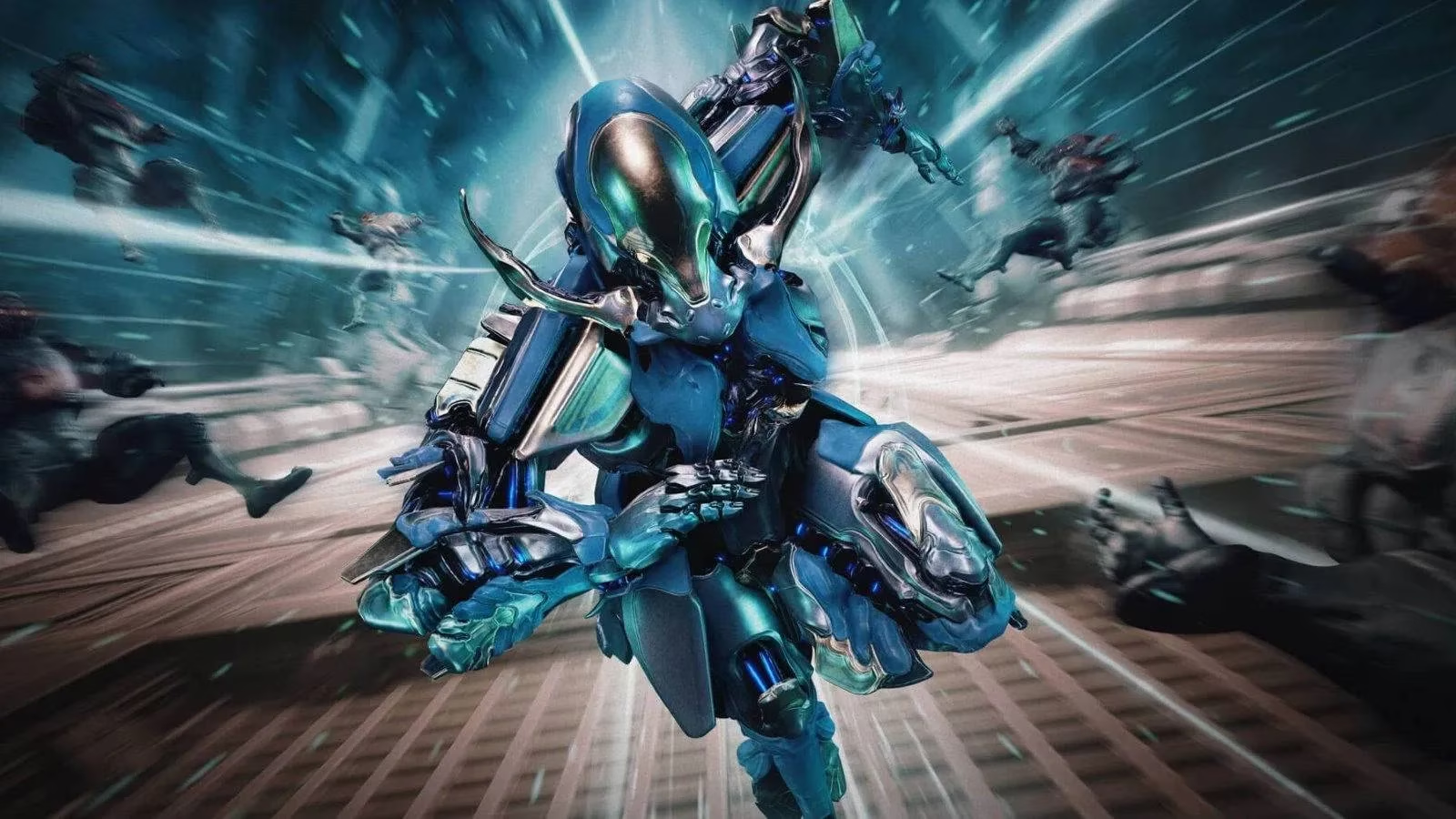
Back in the old days, before Bullet Jump was a shiny, intentional mechanic, Warframe had coptering. If you never saw coptering, imagine a space ninja using melee attacks and animation cancels to turn themselves into a human beyblade. You would chain spins, slides, and attacks until the game’s physics gave up and yeeted you across the map. It was not elegant. It was not intended. It was absolutely hilarious, and it was fast enough to make a speedrunner weep tears of joy.
Coptering was not a feature. It was a bug. But it was a bug the community loved, and that love changed Warframe forever. I recently revisited the story of how Digital Extremes handled it, including comments from COO Sheldon Carter. His explanation is basically game-dev poetry: if every player is doing the exploitative thing, and they all adore it, maybe you should not patch it into oblivion. Maybe you should ask, ‘How do we make this a cool feature and keep the mobility?’
That question became Bullet Jump.
Carter said early Warframe videos were all about coptering through levels. Players were not just breaking the game; they were teaching Digital Extremes what Warframe wanted to be. Mobility was not a side dish. It was the main course. The studio took a glitch and transformed it into one of the most defining movement systems in gaming. As Carter put it, it was a bug that got exploited, and they changed it into a key defining feature of Warframe. That is not damage control. That is alchemy.

Now, in 2026, Bullet Jump is still the heartbeat of Warframe. It is the first thing veterans tell new players. ‘The mobility is amazing,’ we say. ‘You need to check out the Bullet Jump.’ I have had this exact conversation with friends. They ask what makes Warframe different, and I start floating around the Orbiter like a caffeinated hummingbird. ‘You can become a projectile,’ I say. ‘You can cross a tile in two seconds. You can reach places the level designer probably did not intend, and then the level designer says, actually, I did intend that. Please do it more.’
Why did Digital Extremes not just patch coptering out? Carter’s answer comes down to relationship. He describes the studio as co-developing Warframe with players. When players find something, Digital Extremes takes it seriously. Bullet Jump is not coptering exactly, but it is an expression of that feeling. The studio tries to give players what they want in a surprising and different way, so it still feels fresh. Instead of saying, ‘Hey, they just made coptering a thing,’ they changed coptering into Bullet Jumping, which is even cooler because now you can go up and reach places you could not before.
That verticality changed everything. Once you alter how much mobility a player has, you alter how they interact with the game world. Suddenly, stairs are for civilians. Tree branches are landing pads. The second floor is a suggestion. The level design team started coming up with ways to use that mobility in levels. It became a dynamic collaborative process with the players. When Warframe is at its best, Carter says, it is because of that relationship.
Here is the funny part: Bullet Jump was essentially co-developed by Digital Extremes and the players who invented coptering. The players created the first iteration by exploiting what was available. The developers recognized the signal in the chaos and built a better version. If they had simply patched out a bug and moved on, we could be playing a very different Warframe today. Maybe a slower one. Maybe a more ordinary one. Maybe one where I do not launch myself into a Corpus nullifier and immediately regret everything. But probably not.
Let us compare the ancient relic and the modern miracle:
| Ancient Relic: Coptering | Modern Miracle: Bullet Jump |
|---|---|
| Melee animation exploit | Intentional core movement |
| Felt like breaking physics | Feels like being physics |
| Community discovered | DE and community co-developed |
| ‘What is happening?’ | ‘I am the missile now.’ |
A few reasons Bullet Jump still rules in 2026:
-
🚀 It gives every Warframe a baseline of expressive movement.
-
🧠 It rewards map knowledge and mechanical skill without requiring a PhD.
-
🗺️ It turned level design into a playground of vertical shortcuts and hidden routes.
-
🤝 It stands as a monument to listening to players instead of silencing them.
-
😂 It makes every mission feel like a parkour accident waiting to happen.
So here is my takeaway, as a player who has spent far too many hours turning corridors into launch tubes: the best features are sometimes accidents that refuse to die. Coptering was a bug. Bullet Jump is a legacy. And in 2026, when I load into a mission and immediately chain a bullet jump into a slide into a double jump into a wall, I remember that Warframe’s movement was not handed down from on high. It was discovered by players, embraced by developers, and polished into something unforgettable.
Carter summed it up perfectly: it was a bug that got exploited, and they changed that into the key defining features of Warframe. Honestly? That is the most Warframe sentence ever written. Now if you will excuse me, I have a wall to miss by exactly one pixel. 🏃♂️💨
Comments